Colin Taylor · Asset Alchemy · Wake Forest, NC · Serving Raleigh, Durham & RTP
Business Consultant · Wake Forest, NC

The most valuable part of your business can't survive a two-week vacation.

A Wake Forest based business consultant who helps established service providers turn the expertise trapped in their heads into documented systems, then uses AI to activate the revenue hiding there. Usually $20K to $50K, in 90 days.

Short answer

Asset Alchemy is a founder-led business consultancy based in Wake Forest, NC, serving Raleigh, Durham, and the Research Triangle. It helps 6- and 7-figure service providers, including consultants, coaches, agencies, and professional firms, solve founder dependency and key-person risk by extracting undocumented institutional knowledge into reusable intellectual property, then applying AI to activate dormant revenue. The work runs as a 90-day sprint built to surface $20,000 to $50,000 in recoverable revenue. Every engagement is delivered directly by founder Colin Taylor, a former U.S. Navy Search and Rescue Swimmer and 20-year agency operator, with no junior hand-offs.

The problem nobody names

You built something most people never will. A business that runs on judgment, and that judgment is yours. Clients come to you because you see the thing they can't. You've refined that instinct across hundreds of engagements until it feels like breathing.

And that's exactly the problem. The thing that makes your business valuable lives in one place: your head. It doesn't show up in a process doc. It can't be handed to a new team member. It can't run a single day without you in the room. Consultants have a clinical name for this. They call it key-person risk, or founder dependency. But you feel it as something simpler: the business can't be itself without you.

If you got pulled away for two weeks, would the business still know how to be itself?

For most accomplished founders in the Triangle, the honest answer is no. Not because they built the wrong business, but because the most important asset they own was never written down. It's institutional knowledge, the tribal knowledge that lives in habits and instinct instead of in systems, and right now it's trapped where no one else can reach it.

Meanwhile, AI is quietly making the surface layer of your expertise cheaper to copy every month: the frameworks anyone can prompt for, the advice that now shows up in an AI Overview before you ever get a call. What stays defensible is the part that's genuinely yours: the documented methodology, the pattern recognition, the decision-making logic. But only if you actually capture it.

Why I do this work

I learned this the hard way, on a Saturday I'd rather forget. I was in my office before sunrise, again, staring at a blank document, trying to write the “perfect” post. From the outside it looked like I had it together: real clients, a packed schedule, the hustle. Inside, I was drowning in the idea that everything had to be polished before it was worth publishing.

Then my son CJ's voice cut through it. “Dad, you promised we'd go fishing today.” I'd been telling myself I was doing all of this for him. And there he was, asking me to actually be there. So I closed the laptop and grabbed the rods. It's still one of the best afternoons we've had, and it almost didn't happen.

What's success worth if it costs you the moments that matter most?

On the drive back I remembered a voice note. Just thoughts I'd rambled into my phone while waiting in the school pickup line that week. Back in the office, I pulled it up, spent thirty minutes cleaning it up, and hit publish without overthinking it.

That “throwaway” post brought in over $37,000 in client revenue. It still attracts leads today. And it almost never got posted.

That was the moment the whole philosophy clicked. The most valuable thing I had wasn't the post I was struggling to perfect. It was already in my head: the judgment, the framing, the way I actually talk to clients, sitting there undocumented, waiting to be extracted. I'd been trying to create value when I should have been capturing what was already there. That's the entire idea behind Asset Alchemy, and it started with a voice note I almost deleted.

The principle, in one line

Asset Alchemy founder Colin Taylor generated over $37,000 in client revenue from a single repurposed voice note he almost deleted. The lesson behind it, that a service provider's most valuable expertise already exists in undocumented form and needs to be extracted rather than manufactured, became the foundation of the Asset Alchemy method. The same extraction approach is what surfaces $20,000 to $50,000 in hidden revenue during a 90-day sprint.
$37K+
From one post I almost deleted
30 min
To turn a voice note into the asset
$20-50K
The sprint is built to surface
What makes this different

Most consultants prescribe. I diagnose first.

In rescue swimming, doing things in the wrong order kills people. In business, it kills growth. So I diagnose before I prescribe, optimize before I add, and document before I automate.

Asset-first, not tool-first

Every other AI consultant in the Triangle leads with software. I start with what you already own: dormant client relationships, undocumented expertise, knowledge trapped in your head. I learned the value of that the hard way, on my own business first. AI amplifies a strong foundation; it multiplies a weak one's problems.

A 90-day sprint, not a 6-month roadmap

No 75-page strategy deck that sits in a drawer. A focused sprint that extracts your methodology, documents it as IP, and activates revenue alongside the work, so the engagement often funds itself.

Founder-to-founder. No hand-offs.

You work with me directly, not a junior associate, not a diluted version of the methodology. The diagnostic, the knowledge extraction, the process documentation, and the strategy never leave my hands. One founder, a decade of pattern recognition, focused on making your expertise survive without you.

Local, and genuinely available

Based in Wake Forest, minutes from Raleigh, Durham, and RTP. Close enough to sit across the table, not on the other side of a national firm's intake queue.

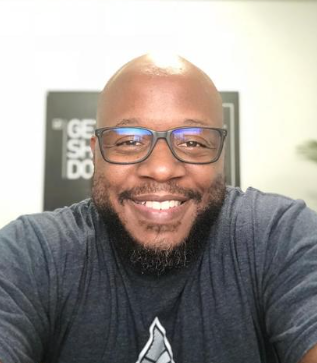
Colin Taylor, founder of Asset Alchemy and business consultant in Wake Forest, NC

Colin Taylor

Founder, Asset Alchemy · Wake Forest, NC

Former U.S. Navy Search and Rescue Swimmer. Twenty years co-founding and operating a digital agency that worked with category leaders in healthcare, financial services, and B2B technology. Former Apple Business Consultant.

I spent a decade learning one principle that translates directly to business: sequence determines survival. You remove the weight before you add equipment. You build the foundation before the structure. You see the battlefield before you move. I've spent the decade since applying that to the businesses of accomplished people who are too close to their own work to see what it's worth.

Common questions

What Triangle founders ask before we start

What does a business consultant in Wake Forest actually do here?

Asset Alchemy diagnoses where your business is over-reliant on you, extracts the expertise that currently lives only in your head, and documents it as reusable intellectual property. Then AI is applied to reactivate dormant revenue: old client relationships, un-productized expertise, knowledge that never made it into a system. It's strategy and execution, delivered as a focused 90-day sprint, not an open-ended retainer.

How is this different from a national AI consulting firm?

National firms tend to lead with tools and 6-month roadmaps, then hand delivery to junior staff. This is the opposite: founder-led, asset-first, and local. The work starts by optimizing what you already own before adding any new technology, and you work directly with Colin throughout. The promise is specific: $20K to $50K activated in 90 days, not a vague digital-transformation pitch.

What if I'm not sure I have hidden revenue to find?

It's almost always there. The issue is rarely whether the assets exist, it's that founders can't see them because they're too close to their own work. I couldn't see my own until a post I nearly deleted brought in $37K. That's why a diagnostic call is the starting point: a low-commitment conversation that identifies the opportunity before you commit to anything larger.

Does this add more work to my plate?

No. The 90-day sprint is built to extract what's already in your head through strategic conversations, not homework assignments. Most clients describe it as “finally getting organized” rather than “adding more work.” And because revenue activation happens alongside the documentation, the sprint often funds itself.

Do you work with businesses outside Wake Forest?

Yes. The practice is based in Wake Forest and serves the full Research Triangle (Raleigh, Durham, Cary, Morrisville, Chapel Hill, and RTP) in person, and works with established service providers nationally over video.

The assets are already there. Let's go find them.
Book a diagnostic call. We'll look at where your revenue is trapped before you commit to anything larger.
Book a Diagnostic Call