It sucks when the cursor blinks at you like it knows something you don't.
Six hours this week, poured into content that barely cracked 30 views.
Meanwhile, yesterday's client breakthrough...
The insight that could shift your entire industry, sits undocumented in your head.
Already starting to fade.
I used to think the problem was writer's block.
Turns out, we may be drowning in ideas, but starving for connection.
The Breaking Point
After another failed attempt at writing this week's newsletter content...
I stepped outside to clear my head.
Planted my fall garden, just to do something with my hands that I could actually control.
When I came back in, I stumbled across a video from Symbiosis, a regenerative agriculture design company in Austin, Texas.
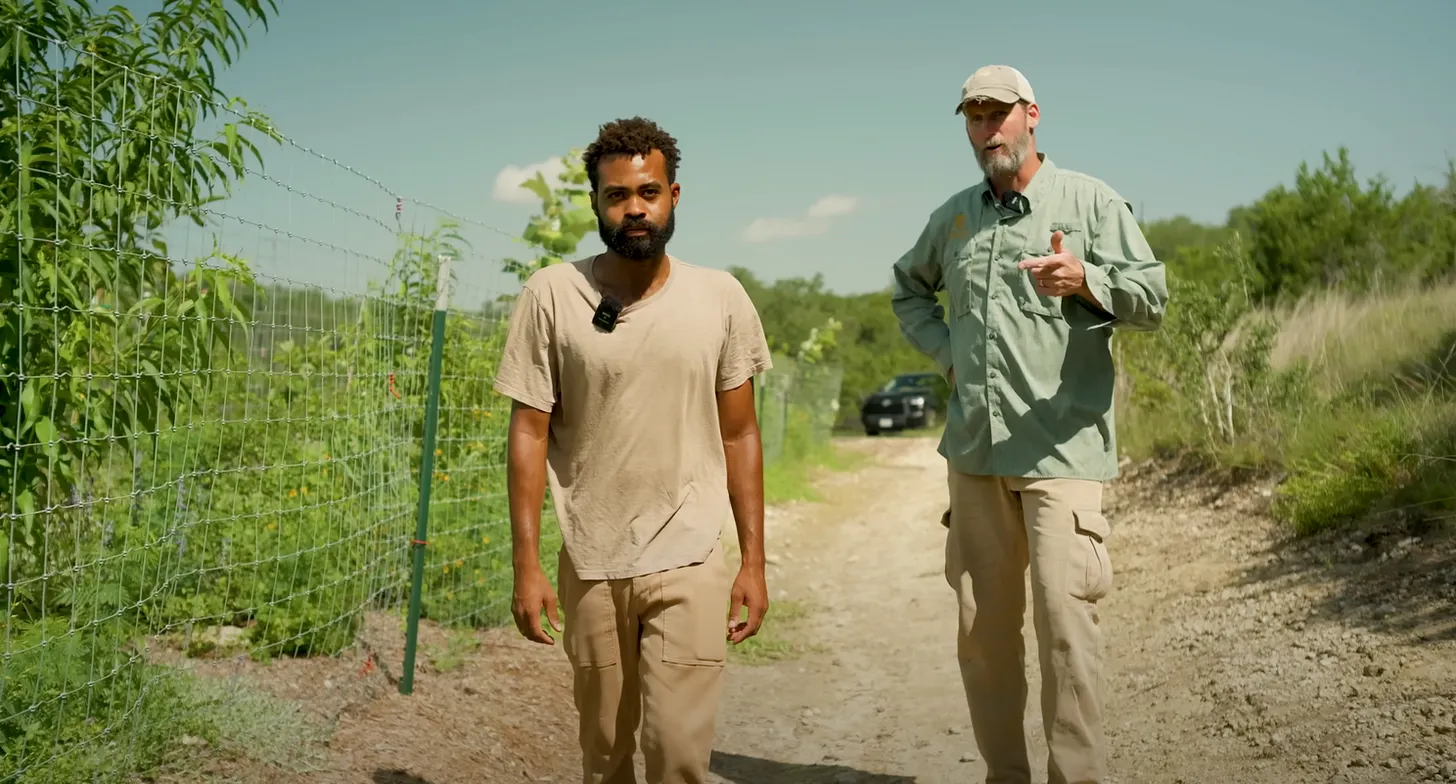
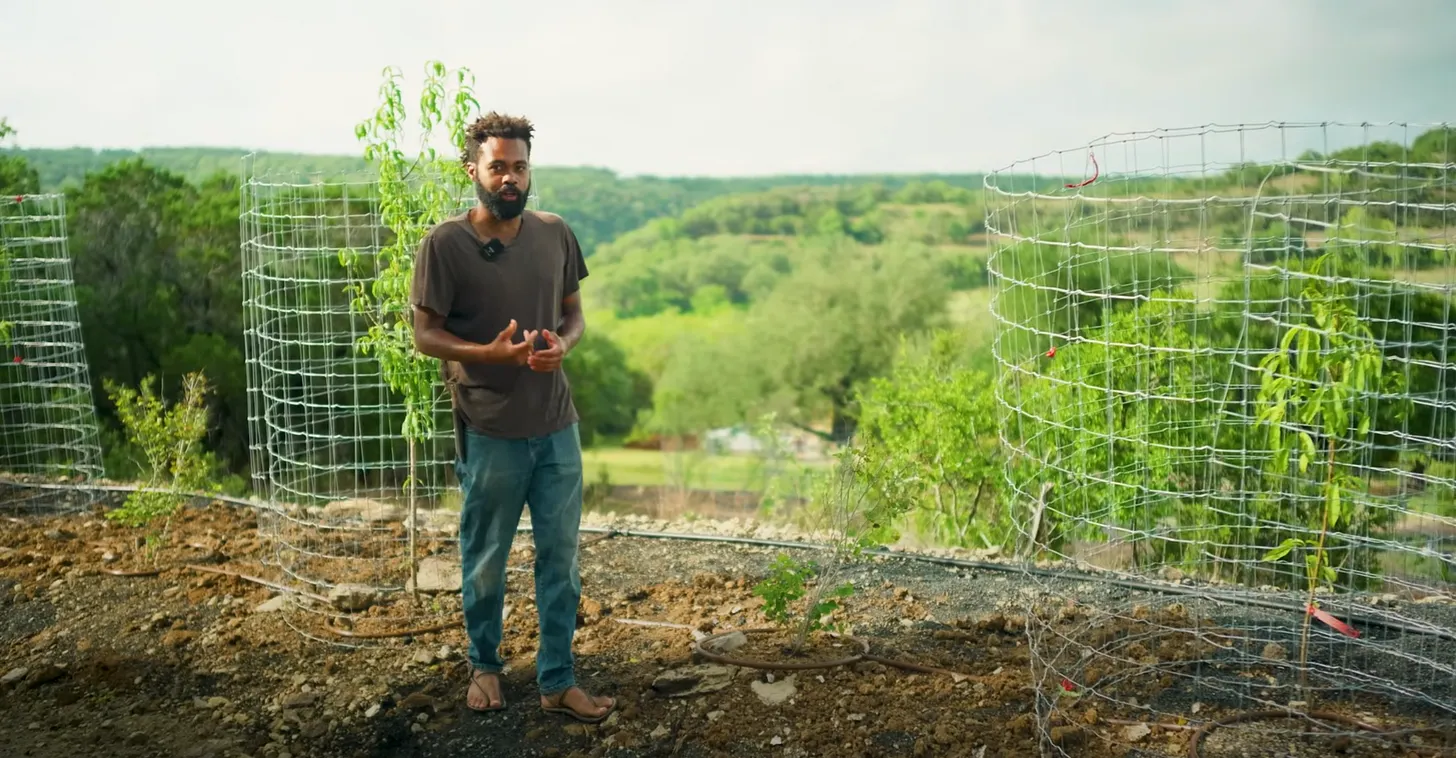
An hour later, I was still locked in watching Michael Wolfert and Chris Jones transform a barren hillside into a thriving food forest.
Halfway through, it clicked. This wasn't about agriculture.
It was about everything I'd been doing wrong.
Jones described how most orchards are designed.
"A lot of times when you look at fruit trees, they're 10, 15, even 20 feet apart. That's more of a conventional orchard style planting."
And then he explained the alternative...
"When you're planting things every foot or three feet or five feet, what you're going to benefit from is the synergy between those plants, shading each other's roots, exchanging nutrients. There's this kind of emergent quality, this forest-like ecosystem that starts to develop much faster."
That's when it hit me.
As business leaders, we're not short on ideas...
We're planting them too far apart.
Each one demands energy, but gives nothing back.
No roots feeding each other. No momentum building.
Just scattered effort that leaves the soil around us, exhausted.
It wasn't the quality. It was the spacing.
What Jones showed with trees, I suddenly saw in business.
Our ideas aren't failing. They're probably starving.
That was the shift I'd been missing.
Maybe you're facing the same challenge.
The Content Wasteland
Most business leaders are making the same mistake.
LinkedIn on Monday.
Newsletter Thursday.
Client work sealed in its own silo.
Each piece exists alone, competing for attention instead of compounding it.
You know this pain. You post something valuable, crickets.
Then you mention the same insight casually in a client call, and they lean forward...
"That's exactly what I needed."
The insight isn't the issue. The isolation is.
Fifteen hours a week of scattered creation feels productive.
But the real cost?
Watching opportunity slip through your fingers because your ecosystem feels random while someone else's feels inevitable.
Like trees planted too far apart, your assets can't share nutrients.
The soil stays dry. Energy bleeds away.
But when your assets are planted close enough to share roots, they stop competing and start compounding.
The 3 Layers That Every Thriving Content Ecosystem Needs
Your business is a food forest waiting to happen.
Canopy Layer
Authority content (LinkedIn posts, newsletters, talks) attracting attention from above.
Understory Layer
Client breakthroughs, case studies, methodology insights feeding the canopy while being protected by it.
Ground Cover Layer
Referral partners, past clients, warm connections spreading naturally when connected to the other layers.
Most entrepreneurs treat these as separate "farms".
That's why their ecosystems never take root.
The Client Clips System: Planting Made Practical
The first time I connected one breakthrough across LinkedIn, newsletters, a case study, and a referral conversation...
It felt like parched soil drinking rain.
One insight, multiple roots, compounding growth.
Within 30 days, the shift was undeniable.
Dense planting didn't just transform how I worked. It transformed how my clients experienced growth. Their scattered ideas started producing exponential results once we started planting them closer together.
That realization became the foundation of Client Clips, a system that turns one 90-minute interview into 90 days of interconnected, authority-building content.
Client breakthroughs are captured once, then planted across video, LinkedIn, newsletters, case studies, and referral stories, each one feeding the others.
The results?
Impressions spiking 1,623%
New $250K engagements scaling into $1M contracts
Multi-year deals that began with a single shift in their content approach
It's the 300-Tree Principle applied at scale.
Every insight captured, every asset interconnected, every result compounding instead of fading.
Next, we're layering in intelligent automation systems to make this system even more powerful...
So your content forest keeps growing even while you sleep.
The Biomass Advantage: Why Nothing Goes to Waste
Jones described their pruning cycle...
"Plants feed the soil by putting their biomass back in forms more accessible."
Or as he put it another way...
"Basically, imagine these plants as a filtration or recycling system. They pull nutrients up, then return them to the soil in ways other organisms can actually use."
Your business has biomass too.
Every client conversation.
Every breakthrough insight.
Every case study.
But when you recycle it into content, posts, newsletters, speaking topics, even referral stories (and space them properly)...
You create a self-feeding system.
Like the mushroom blocks Jones showed, your breakthroughs unlock hidden energy in what looks like "rocky soil."
Competitors burn out creating from scratch.
You compost real insights into an endless loop of interconnected value.
Their effort dilutes. Yours compounds.
The Monoculture Trap
But there's a catch.
Dense planting only works with diversity.
Jones warned that monocultures, planting too much of the same thing, strip the soil bare.
The business version? Automation-driven sameness.
Thirty posts spun from one ChatGPT prompt. Ninety days of "5 Tips" variations.
Your audience doesn't disengage from volume. They disengage from predictability.
Dense networks thrive on the messy reality of real client problems, failed experiments, and surprising wins.
That's the rich soil where authentic engagement grows.
Is Your Content Starving? The Asset Spacing Audit
Three questions reveal where your ecosystem is starving:
Content Integration: Does your LinkedIn feed your email? Do client results become thought leadership?
Client Work: Are you capturing breakthrough moments during sessions? Do they become next month's content calendar?
Relationships: Do past clients know your current offers? Do referral partners see your content evolution?
If you can't draw literal lines connecting these assets, they're planted too far apart.
Your First Terrace: How to Start Planting Assets Closer Together
Start with one connection.
Week 1: List every piece of content from the last 60 days. Document your 5 most recent client breakthroughs. Map your relationship network.
Week 2: Choose one breakthrough. Connect it to a LinkedIn post, newsletter theme, and case study angle.
Week 3: Publish your first "terrace", one story repurposed across all channels. Watch how each piece feeds the others.
The compound effect starts immediately.
The Forest Affect: When Your Content Starts Feeding Itself
Jones made a prediction about their 300-tree system.
"In a few years, their roots will be interacting constantly. There's a case for planting even closer."
Your business assets will create their own weather patterns, if you plant them close enough.
While competitors burn energy maintaining isolated content farms...
Your dense network quietly matures into something they can't replicate: a self-sustaining ecosystem that gets more productive over time.
I lived the frustration of pouring 15 hours weekly into content that disappeared into the void.
That pain made this breakthrough hit like lightning.
The first time your posts, client work, and referrals all spark off each other like roots sharing nutrients, you'll feel the shift in your business results.
That's the forest affect. And it starts with your first intentional connection.
Take 20 minutes this week. Map where your assets live. Take action.
Or if you want to shortcut the process, let's map your first terrace together.
Book your Asset Alchemy Discovery Call today.
Colin Taylor
Creator, The Asset Alchemy Method
P.S. Thanks to Michael Wolfert, Chris Jones and the Symbiosis team. Sometimes the most profound business insights come from people who never intended to teach business at all. But even the healthiest ecosystem fails if the hillside erodes beneath it. Next week, we'll look at The Terrace Effect. The simple shift that keeps your revenue from rushing away like floodwater.
Frequently Asked Questions
What is the 300-Tree Principle in business content strategy?
The 300-Tree Principle is drawn from regenerative agriculture, where planting trees densely (every 1-3 feet instead of 15-20 feet apart) creates synergy: shared root systems, nutrient exchange, and faster ecosystem development. Applied to business, it means planting your content assets close enough together that they feed each other. LinkedIn posts feed newsletters, client breakthroughs become case studies, referral stories become authority content. The result is a self-sustaining content ecosystem that compounds instead of competing for isolated attention.
What are the three layers of a thriving content ecosystem?
The Canopy Layer is authority content (LinkedIn posts, newsletters, speaking engagements) that attracts attention from above. The Understory Layer is client breakthroughs, case studies, and methodology insights that feed the canopy while being protected by it. The Ground Cover Layer is referral partners, past clients, and warm connections that spread naturally when connected to the other layers. Most entrepreneurs treat these as separate farms, which is why their ecosystems never take root. The Asset Alchemy Method connects all three.
What is the Monoculture Trap in AI-driven content creation?
The Monoculture Trap occurs when businesses use AI to produce high volumes of similar content, like thirty posts from one ChatGPT prompt or ninety days of "5 Tips" variations. Dense planting only works with diversity. Audiences do not disengage from volume. They disengage from predictability. Dense content networks thrive on real client problems, failed experiments, and surprising wins. That is the rich soil where authentic engagement grows.
How do you audit whether your content assets are planted too far apart?
Three questions reveal the gaps. Content Integration: does your LinkedIn feed your email, and do client results become thought leadership? Client Work: are you capturing breakthrough moments during sessions, and do they become next month's content? Relationships: do past clients know your current offers, and do referral partners see your content evolution? If you cannot draw literal lines connecting these assets, they are planted too far apart. The Asset Alchemy Method calls this the investigation-to-activation gap.