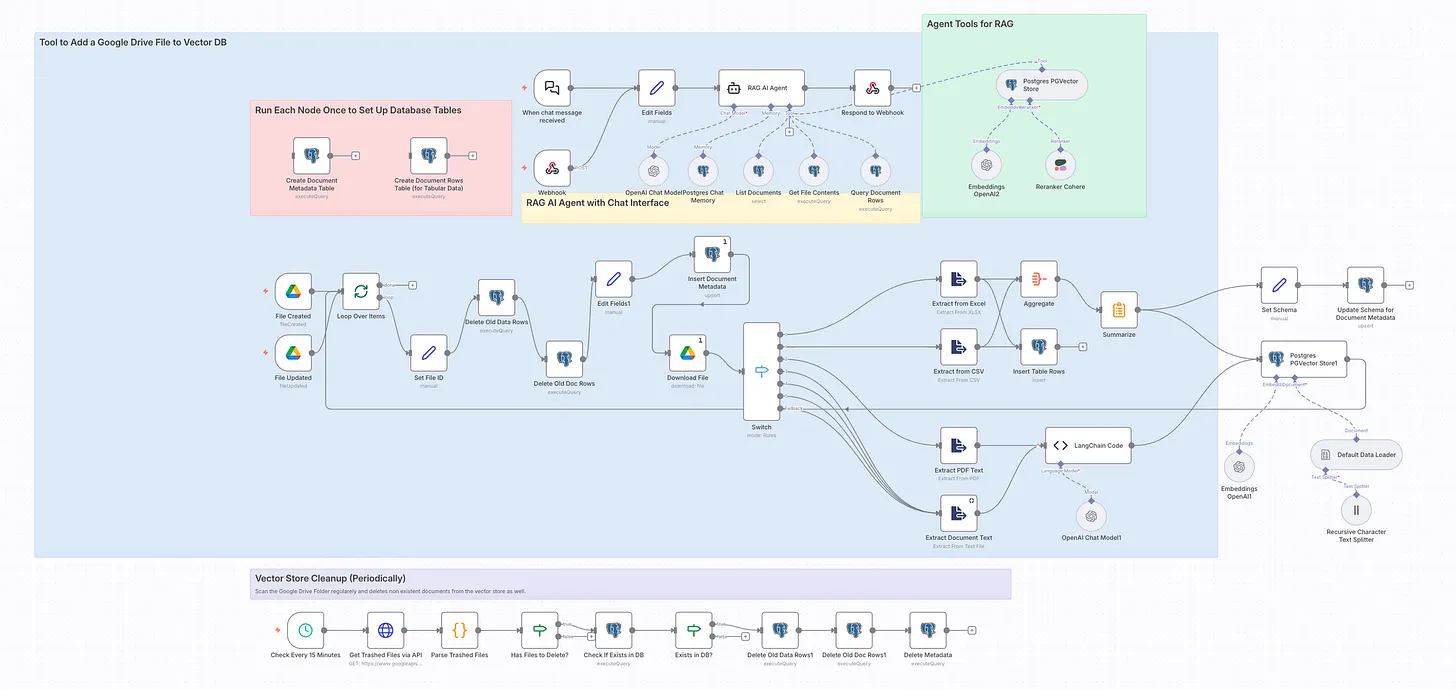
This is one component of a client build that I've been staring at for the past three weeks.
Not sexy, is it?
But this unglamorous screenshot represents $40K in annual savings, $100k+ in upside opportunities, and over two decades of intellectual property becoming what one executive called...
"The unfair advantage we didn't know we had."
But here's what I've noticed.
Everyone wants AI results. Nobody wants to do AI infrastructure.
Another powerful truth that we're learning in real-time...
The businesses that win with AI won't be the ones with the coolest tools.
They'll be the ones who did the boring work of organizing their knowledge first.
Let me show you why this matters.
Because the challenges I'm facing right now are probably hiding $20K-$50K+ in your business too.
The Counterintuitive Truth: Why Generic AI Just Made Your IP More Valuable (Not Less)
Everyone thinks AI is replacing expertise.
The opposite is happening.
Generic AI is creating so much noise that proven expertise is becoming the only signal buyers trust.
But your expertise is trapped in...
- email threads from 2019
- frameworks you taught once but never documented
- client notes buried in folders
- and methodologies living entirely in your head.
The market shift nobody's talking about.
According to McKinsey research...
75% of generative AI's value comes down to 4 key areas...customer operations, marketing and sales, software engineering and R&D, all areas where your specific knowledge creates differentiation.
But off-the-shelf LLMs fail to deliver transformative business impact because they're generic by design.
That's why so many people complain about AI feeling like an annoying yes-man that doesn't provide any real value.
The AI gold rush just made your IP more valuable, not less, IF you can make it accessible.
Here's The Problem With Regular ChatGPT for Your Business
Imagine hiring a brilliant consultant who's read everything on the internet.
But has never read your methodology, never seen your client case studies, and doesn't know which frameworks you use when a C-suite client asks about board resistance.
Every time your team asks ChatGPT for help, they're talking to that consultant.
Smart, but clueless about what actually works in your business.
RAG changes that equation completely.
RAG (Retrieval Augmented Generation) is like giving that brilliant consultant a direct line to your company's brain...
- YOUR documentation
- YOUR proven frameworks
- YOUR actual client wins.
There are a lot of ways to approach this, but here's the basics of what that looks like in practice.
Without RAG?
Your senior consultant asks ChatGPT...
"What's our approach to handling board resistance?"
ChatGPT responds with 5 generic change management strategies you could find in any MBA textbook. Nothing specific to your methodology. Nothing your client couldn't Google themselves.
With RAG connected to your knowledge base: Same question.
The system instantly pulls from your actual methodology documentation...
"Here's the exact 3-phase stakeholder mapping protocol that worked in 12 of your last 15 enterprise engagements, including the diagnostic questions that reveal whether the board is actually resistant or just under-informed, plus the 90-day implementation roadmap."
Same consultant. Same AI. Completely different strategic value.
Here's How It Actually Works Behind The Scenes
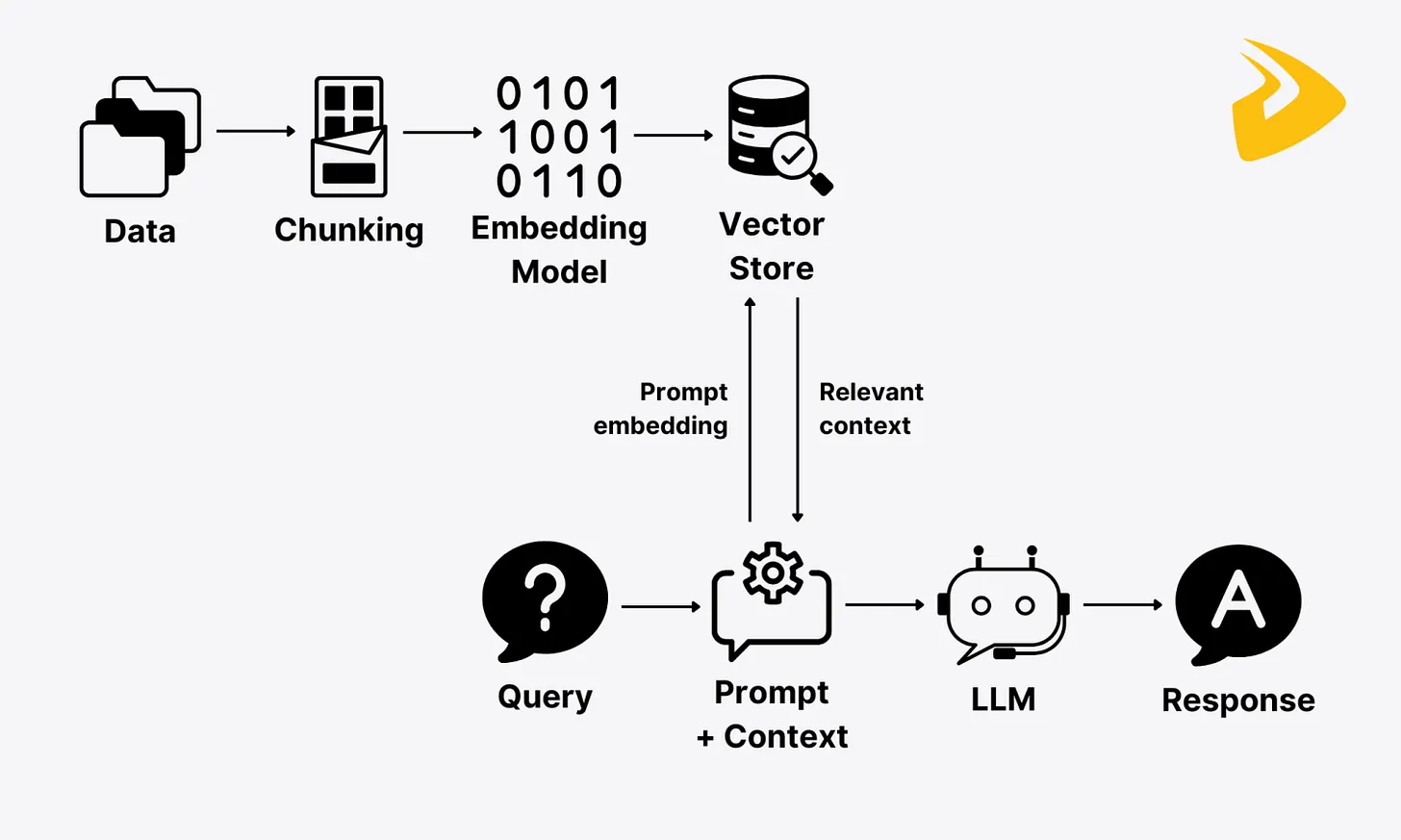
Your documents get broken into digestible sections...(think of it like organizing a filing cabinet by topic instead of dumping everything in one drawer).
Each section gets converted into a format AI can search through, not by matching keywords, but by understanding meaning.
When someone asks a question, the system finds the sections that are most relevant to what they're actually trying to accomplish and feeds those to the AI.
The AI then responds using your voice, your frameworks, your proven results.
Not generic internet knowledge.
Why this matters right now.
The reality is simple. AI amplifies whatever foundation you give it.
Feed it scattered, disorganized knowledge? You get scattered, generic responses.
Feed it your organized Intellectual Architecture?
You get responses that sound like your team at their best...precise, credible, proven.
That's the difference between AI as a commodity and AI as a competitive moat.
But Here's What People Don't Tell You About Capturing Your Brilliance
The map is never the territory.
You can read every RAG implementation guide, watch every tutorial, follow every best practice, and you'll still hit walls the documentation never mentioned.
Because building a knowledge system that actually reflects your expertise isn't a technical problem.
It's a strategy and organizational problem requiring technical persistence.
Whether you're doing it yourself or paying someone else.
Someone has to do the hard work of translation, from expertise to documentation to structure to retrieval.
That gap between "we should build a RAG system" and "we have a functioning RAG system" is where most people quit.
Because the territory is messier than any map prepared you for.
The Three Walls Between "We Should Build This" and "This Actually Works"
Let me walk you through the three challenges that we've had to work through.
Because if you decide to do this (and you should), you'll probably face these too.
Challenge #1: The Accuracy Problem
Last Wednesday, I fed the RAG system my client's methodology documentation.
The AI started giving answers that were close but not exact.
Close enough to sound right. Wrong enough to matter.
The issue: RAG systems are only as good as how you chunk information.
Too big, the AI gets confused. Too small, it loses context.
Think about your signature process.
Could someone understand it from any single document?
That's the accuracy challenge, solvable through intentional structuring. Each "chunk" needs enough context to stand alone while referencing where to find deeper information.
Challenge #2: When Your Brilliance Becomes Your Bottleneck
Picture seven years of transformative client work scattered across folders labeled "Final_FINAL_v3," Google files organized by defunct projects, untranscribed voice recordings etc.
Now imagine you and your employees wrestling with this...
"I know we've solved this exact problem before. I just can't find where we documented it."
That sentence could cost you 5-10 hours minimum per consultant/employee, per week.
Employees end up spending 1.8 hours daily searching for information because knowledge is scattered.
You can't just dump everything into AI and expect magic.
What I'm learning: Start with the transformations that define your premium positioning.
For this client in particular, that meant identifying the key breakthroughs their methodology delivers.
The moments where executives go from "I understand" to "I'm committed."
We're organizing the Intellectual Architecture that creates transformations.
- Strategy decks that reframe problems
- Diagnostic frameworks that reveal blindspots
- Implementation roadmaps that turn insight into action.
The unexpected insight: The organization process itself became a mirror.
When you structure IP for AI retrieval, you're forced to answer questions you've been avoiding. Questions like...
What exactly creates the transformation?
Which frameworks do you reference in high-stakes moments?
What language shifts prospects from interested to committed?
Generic AI gives generic answers.
AI connected to organized intellectual architecture sounds like you at your best.
Not you (or your employees) scrambling to remember the framework in real-time.
Challenge #3: The Privacy Advantage (When Privacy Becomes Strategy)
At the start of this project, the client said..
"This sounds amazing, but we can't risk our IP ending up in ChatGPT's training data."
That sentence revealed the misconception that kills more RAG projects than budget, timeline, or complexity combined.
Here's the thing.
Private RAG doesn't mean "being careful with ChatGPT." It means your IP never touches OpenAI's infrastructure at all.
For this current project, we hosted this client's entire knowledge base on their own servers.
Zero data leaves their environment. OpenAI never sees their methodologies.
Their competitive intelligence stays theirs. Most knowledge base platforms offer private deployment options, it's not exotic, just intentional.
The unexpected benefit is that this helps create a moat competitors can't cross.
When your consultants use generic ChatGPT, they're essentially sharing your thinking patterns with everyone else using the platform.
When they use your private RAG system, your expertise compounds internally, getting smarter with every use while remaining invisible to competitors.
And that's not just protection, it's how you build an advantage competitors can't buy.
Why I'm Pushing Through (And the Costly Lesson About Scope Decisions)
Here's what changes when this works.
Your senior consultants and/or employees stop wasting 5-10+ hours per week hunting for frameworks they know exist somewhere.
New team members access a decade of institutional knowledge on day one instead of month six.
Client questions get answered with your proven methodologies, not generic ChatGPT responses.
But here's the part nobody talks about.
The compounding effect.
- Every piece of new content feeds the system automatically.
- Every client question improves its accuracy.
- Every team member contributes their expertise, and benefits from everyone else's.
- Every AI advancement (better models, better retrieval) makes your system smarter without you rebuilding anything.
This isn't a tool you implement once.
It's infrastructure that gets more valuable every single day you use it.
The Honest Reality (And What I Learned About When to Rebuild vs. Iterate)
We're a month behind schedule.
They're not upset.
They genuinely understand that building foundation architecture beats rushing to "good enough."
What frustrates me is how we got here.
Around week four, we discovered two significant AI advances.
A different data ingestion method that would dramatically improve retrieval accuracy, and automation enhancements that would let the RAG system both self-update and actively produce content.
These weren't in scope. We could have shipped without them.
We had a decision to make.
Deliver the agreed-upon knowledge base on time, OR...
Incorporate capabilities that transform this from "internal consultant application tool" to "infrastructure that compounds expertise automatically"?
We chose the latter.
But what we underestimated was the cascading effect.
- The superior ingestion method meant revisiting how we were processing all structured data.
- The automation enhancements meant rethinking how RAG interfaces with their entire tech stack.
It wasn't adding features.
Think of it like rebuilding the foundation with a different load-bearing structure.
The Lesson We're Taking Going Forward
Ship the MVP, get it in users' hands, then enhance based on real usage.
Under normal circumstances that makes sense. But there's a critical exception.
When accuracy IS the product (like consultancies where credibility hangs on precision), you can't iterate your way out of a shaky foundation.
A RAG system that's 70% accurate doesn't improve through usage, it erodes trust until nobody uses it.
We made the right strategic call. We fumbled the project management.
What we should have done.
Paused at week three, showed them the new capabilities, laid out the implementation impact, and reset the timeline together.
Instead, we tried to absorb the scope expansion invisibly.
The framework I'm taking forward.
- Default to MVP, iterate for most builds
- Exception: Rebuild for foundational accuracy when core value is precision/trust
- Always: Reset expectations when mid-build opportunities change the architecture
Even when you make the right strategic decision, poor expectation management can turn it into stress instead of a value conversation.
What This Really Is: Asset Optimization, Not Technology
Building a RAG pipeline isn't about jumping on the AI bandwagon.
It's about organizing the asset you've been building for years, your intellectual property, so it works for you instead of being stuck inside your head.
The Asset Activation Path (Optimize Before You Automate):
- Weeks 1-2: Asset X-Ray for your IP. What transformation-creating knowledge exists scattered across your business? Start with your premium positioning, the methodologies that justify your rates. Document the frameworks you reference when stakes are highest, not when tasks are routine.
- Weeks 3-6: Build your intellectual architecture. Connect content by the client breakthrough it creates. Your methodology for handling executive resistance should link your diagnostic frameworks, your proven language patterns, and your implementation roadmaps, regardless of format. Organize for transformation, not necessarily just ease of filing.
- Weeks 7-12: Deploy and diagnose. Implement your knowledge foundation (starting at $50-500/month platforms), connect to AI tools, then test against complexity: "How would you advise a C-suite client facing [your hardest scenario]?" The gaps in AI responses reveal gaps in your structure.
I truly believe most companies will see measurable ROI within 30-90 days.
Not because the technology is magic.
But because you finally made your expertise accessible.
The choice you have to make?
Keep your brilliance trapped in your head and scattered across drives...
Or spend 90 days organizing what you already know and turn it into a competitive advantage that compounds for the next decade.
Here's another thing to keep in mind.
The harder this is to build, the bigger your competitive moat.
Most competitors won't do the boring work. They'll chase tools instead.
The Invitation
I've been neck deep working on this, but I'll do a better job documenting this entire build, the wins, the frustrations, the "why didn't anyone tell me this" moments.
In the meantime, quick question for you...
What's one piece of intellectual property you know is valuable but currently can't access when you need it?
Reply with just that. I'll respond with whether RAG would actually solve it or if you need a different approach entirely.
(And if you're thinking "I don't even know where to start auditing what I have," that's the perfect place to start. Reply with that.)
The difference between businesses that use AI as a commodity and businesses that use it as a moat comes down to one thing...
Whether they did the boring work of organizing their intellectual property first.
Stay sharp,
Colin Taylor
Creator of The Asset Alchemy Method
Frequently Asked Questions
What is RAG and why does it matter for service businesses?
RAG (Retrieval Augmented Generation) connects AI to your specific business knowledge instead of generic internet data. It transforms AI from a "brilliant consultant who's never read your methodology" into one that responds using your voice, your frameworks, and your proven results. The Asset Alchemy Method uses RAG as the infrastructure layer that makes documented expertise compound over time.
How much hidden value is trapped in scattered business documentation?
Employees spend an average of 1.8 hours daily searching for information because knowledge is scattered. For a team of senior consultants, that's 5-10+ hours per person per week of lost productivity. The $140K figure comes from combining direct productivity savings ($40K annually) with upside opportunities ($100K+) unlocked when two decades of intellectual property becomes searchable and actionable.
What are the biggest challenges in building a RAG system?
Three walls block most implementations: the Accuracy Problem (chunking information so AI gives precise, not approximate answers), the Organization Problem (transforming scattered expertise into structured intellectual architecture), and the Privacy Problem (ensuring proprietary IP never leaves your environment). The Asset Alchemy Method addresses all three through the 90-day Asset Activation Path.
How long does it take to see ROI from organizing business knowledge for AI?
Most companies see measurable ROI within 30-90 days, not because the technology is magic, but because organized expertise becomes accessible for the first time. The Asset Activation Path follows three phases: Weeks 1-2 for Asset X-Ray, Weeks 3-6 for building intellectual architecture, and Weeks 7-12 for deployment and diagnosis.