It's not even an inability to critically think. It's an inability to read sentences.
Those are the words of a Pepperdine humanities professor in a January 2026 Fortune piece, describing what she's watching happen to her students in real time.
Not paragraphs.
Sentences.
And what she's describing is the quieter half of Mo Gawdat's 4,000 IQ prediction.
The half I missed when I first wrote about it a few months back.
Here's how Mo framed it on Steven Bartlett's podcast, The Diary of A CEO.
The former Chief Business Officer at Google X - the place Google sends its most impossible problems - looked into the camera and said:
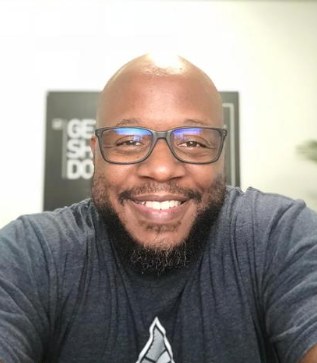
[INLINE IMAGE: Mo Gawdat on The Diary of A CEO. Image Credit: Diary of A CEO YouTube Channel. Upload manually in Webflow.]
If I can borrow 4,000 IQ points in 3 years time, my IQ itself becomes irrelevant. All of us suddenly become equal. All of us become peasants.
It would've been easy to just lock onto the shock value.
The credentials becoming commodities.
The MBAs becoming meaningless.
The 15-year client relationship becoming priceless.
I made that point at the time, and it definitely still holds.
But here's something worth pulling out of that same conversation that was easy to miss.
Asked why people would still buy from him as an AI-augmented author when they could go directly to ChatGPT...
Mo's answer was about why AI's words always ring hollow:
I have an asset that the world still needs and will always need. A human. So when I tell the world that I'm worried about the future of my daughter, everyone feels my heart, which AI will never be able to replicate. Because they can tell you 'we're worried about our daughters,' but you know there was no daughter.
The AI can say the words.
It just can't carry the weight underneath them.
Mo named the principle. He just sized it as a niche.
He framed the unfakeable human with lived experience as an asset that creates "a job class."
Something durable, but small.
For Anyone Selling Expertise, This Isn't A Niche. It's The Whole Game.
And what Mo didn't factor in (or what I didn't give enough attention to at the time)...
Is what's happening to the humans on the receiving end at the exact same time AI is climbing.
AI capability is rising.
Human cognitive capacity is falling.
That's probably not a surprise to you by now.
But the mistake is thinking that these two trajectories are running in parallel.
They're not.
They are scissors. And they're closing.
The gap between the blades is the largest scarcity premium of our professional lifetime.
If you're a 6 or 7 figure operator, this should change how you spend your next 90 days.
Not in some abstract way.
In a specific, time-bound way.
Let me show you why.
Your Audience Is Losing the Ability to Read (Scary, but True)
If you've been on social media in the last few months, you may have seen the videos.
Someone walks up to a 20-something with an index card.
A few sentences. Nothing fancy.
Words a fourth-grader should be able to read.
And the camera catches it. The pause. The stumble.
The look of someone trying to parse something that should have taken a second or two.
Not occasionally. Repeatedly.
Across video after video. Across people in their late teens, twenties, even early thirties.
It's hard to watch.
And it isn't just the camera finding the outliers.
In January 2025, the NAEP - the Nation's Report Card - released the 2024 results.
40% of fourth graders are now reading below the NAEP Basic level.
The largest percentage since 2002.
And a third of eighth graders are failing to hit NAEP Basic in reading.
The largest percentage ever recorded on a test administered since 1969.
In September, the 12th grade results dropped.
45% of the class of 2024 scored below NAEP Basic in math.
Reading scores were lower than any previous assessment in the history of the test.
Then ACT released the class of 2025 numbers.
Only 21% met all four college readiness benchmarks.
The lowest on record.
And in 2025, Americans aged 18 to 29 read an average of 5.8 books.
Nearly half of all Americans read zero.
That's a population learning to be guided by AI through a world they can no longer parse on their own.
These are the people becoming your hires.
The Ones Who Can Read Are Outsourcing the Thinking
The adults who can still read?
In February 2025, Microsoft Research and Carnegie Mellon published The Impact of Generative AI on Critical Thinking.
The key takeaways...
The more confidence a person had in AI's capabilities, the less critical thinking they engaged in.
The more confidence they had in their own skills, the more critical thinking they engaged in.
Same tool, but depending on the order of operations...
Two different cognitive outcomes.
Then in June 2025, MIT's Media Lab released Your Brain on ChatGPT. EEG monitoring.
Three groups writing essays.
The ChatGPT group showed the weakest brain connectivity.
The brain-only group showed the strongest.
And here's the finding that should sober up every operator in your circle:
83% of the ChatGPT users couldn't accurately quote essays they had just finished writing.
Their own arguments. Submitted under their own name.
Couldn't quote them.
These are the peers you're competing against.
And most of them are letting their judgment atrophy in front of you in real time.
The Ones Who Can Read AND Think Critically Don't Trust Anyone
The people you're actually selling to?
In January 2026, Edelman released the 26th annual Trust Barometer.
70% of respondents are now hesitant or unwilling to trust someone with different values, information sources, or backgrounds than their own.
Only 1 in 3 says most people can be trusted at all.
But trust hasn't evaporated. It's localized.
Big institutions, traditional experts, mainstream media - all bleeding trust.
The remaining trust is concentrated in named, specific humans.
Your prospect doesn't trust the LinkedIn algorithm as much as they used to.
Doesn't trust the AI overview.
Doesn't trust the consulting firm thought leadership.
Doesn't trust the polished landing page that could have been written by anyone.
What they still trust is a specific named human, sharing a specific lived experience, expressing a perspective only that human could have earned.
Three trends. One pattern.
It's a harsh reality, but you can't afford to ignore this.
The market you're selling into is losing the capacity to receive, the discipline to reason, and the disposition to trust...
...at the exact moment AI is amplifying everyone's output to look more authoritative than they actually are.
Three Things That Will Help You Stand Out Today
These three things may be the most under-leveraged assets you have available to you right now, and I don't want you to make the mistake of overlooking them.
Your lens.
What you see that nobody else does. The pattern you recognize because you've sat in the room when it formed.
Your logic.
How you reason through what you see. The framework you developed by getting it wrong enough times to create a better one.
Your lived philosophy.
Why you reason the way you do. The hard-earned worldview that comes from the work, the failures, the recovery, the rebuilds.
Think of these as three legs of one stool.
Three tests every piece of content you put into the market now passes or fails in sequence:
If your lens is missing, AI mirrors nothing.
Stanford and BetterUp measured this last year. $9 million a year in invisible "workslop" tax inside the average 10,000-person organization.
If your logic is missing, the machine has nothing structured to cite.
Yext analyzed 6.8 million AI citations and found 86% come from sources brands either own or manage. If yours isn't documented, you're not in those citations.
If your lived philosophy is missing, no human has reason to forward you.
The trust premium Edelman measured isn't transferable.
It belongs to named, specific, un-fakeable humans.
Three things AI cannot generate.
Three things a falling baseline cannot replicate.
What This Looks Like When the Money Actually Moves
Right now, while you're reading this, somewhere in your market is a prospect who needs exactly what you do.
They've never heard of you.
They open ChatGPT.
They type the question you've been answering for clients for the last 15 years.
In the next few seconds, the machine is going to recommend someone.
It will either be you, or it will be one of the three competitors in your category whose work it has been able to find, parse, and learn from.
Not the smartest competitor. Not the most experienced.
The one most readable to AI.
Here's what determines which side of that recommendation you land on.
If your methodology lives only in your head - in the way you talk to clients, in the judgments you make on calls, in the moves you make that you've never written down...
The machine cannot cite you.
It doesn't matter that you're better.
It cannot see you.
The competitor it cites has spent the last twelve months making their own thinking AI-accessible.
Their documented framework.
Their patterns. Their reasoning.
Their personal stakes, including the $2M mistake they watched a client almost make and helped them avoid.
Their AI isn't writing from the average internet.
It's writing from their library.
The prospect never reads their LinkedIn post.
ChatGPT reads it.
Then summarizes it for the prospect.
Then recommends them by name.
The prospect books the call.
You never know the prospect existed.
That's not a scenario.
That's Tuesday morning, somewhere in your market, right now.
I've spent the last several months doing exactly this work with clients.
Extracting their lens. Naming their logic. Documenting their lived philosophy in forms AI can actually parse and cite.
And watching their names start showing up in ChatGPT, Perplexity, and AI Overview citations for queries their competitors don't even know are happening.
You're Already on the Right Side of This
Mo was right when he said that in 36 months, cognitive ability becomes a commodity.
It's only been ten months since that video was published...
And you could argue that AI is already delivering 4,000 IQ points to anyone who asks.
But Mo was only describing one blade of the scissors.
The other blade, the one we need to pay just as much attention to...
Is the falling human baseline that makes documented lens, logic, and lived philosophy the only thing that occupies the gap between them.
The class of 2024 is showing in your hiring pipeline.
The collapse of trust is showing up in your sales calls.
The lack of literacy is increasing in your audience.
That gap is closing.
The scarcity premium is real. And it's larger than it has ever been in our professional lifetimes.
The good news is, you're already on the right side of it.
The harder news.
You may not have documented enough of it yet for the market to see what you actually carry.
That's the work in front of you this quarter.
Not more AI. Not better prompts. Not another tool.
Documented, evolving perspective.
In a form that travels beyond you and picks up steam along the way.
That's the work that can ReConnect you.
And give you a renewed sense of purpose in this new environment.
Stay sharp,
Colin Taylor
Creator of The Asset Alchemy Method™
Sources
Fortune. Pepperdine humanities professor interview on student reading capacity (January 2026).
Mo Gawdat on The Diary of A CEO with Steven Bartlett. YouTube Channel.
National Assessment of Educational Progress (NAEP). 2024 Nation's Report Card. Released January 2025 (grades 4 and 8) and September 2025 (grade 12).
ACT. Class of 2025 College Readiness Report.
Microsoft Research and Carnegie Mellon University. The Impact of Generative AI on Critical Thinking (February 2025).
MIT Media Lab. Your Brain on ChatGPT (June 2025).
Edelman. 26th Annual Trust Barometer (January 2026).
Stanford University and BetterUp. Workslop tax study.
Yext. 6.8 million AI citation analysis.
Frequently Asked Questions
What did Mo Gawdat say about 4,000 IQ points?
On Steven Bartlett's Diary of A CEO podcast, former Google X Chief Business Officer Mo Gawdat said that if everyone can borrow 4,000 IQ points within 3 years, individual IQ becomes irrelevant and all of us suddenly become equal. He framed this as making credentials, MBAs, and intellectual edge into commodities, which means competitive advantage shifts entirely to assets AI cannot replicate. This is the same dynamic explored in When AI Makes Everyone Brilliant, Only One Thing Will Keep You in Business.
What is the cognitive scissors effect?
The cognitive scissors describes two trajectories closing on each other at the same time. AI capability is rising rapidly while human cognitive capacity is measurably falling, evidenced by NAEP 2024 reading scores, MIT brain connectivity research, and the Edelman trust collapse. The gap between the two blades is the largest scarcity premium of our professional lifetime, and that gap is what documented lens, logic, and lived philosophy can occupy. This builds on the lived experience competitive advantage analysis.
How do I make my expertise stand out from AI-generated content?
Document three things AI cannot generate. Your lens, what you see that nobody else does. Your logic, how you reason through what you see. Your lived philosophy, why you reason the way you do. Each one is a test the content passes or fails before AI systems decide what to cite. Yext analyzed 6.8 million AI citations and found 86% come from sources brands either own or manage. This is the documentation work covered in From Invisible to Indispensable.
Why do AI systems like ChatGPT recommend some experts and not others?
AI systems cite sources they can parse, structure, and learn from. If your methodology lives only in your head, in client conversations and judgment calls you have never written down, the machine cannot cite you. The competitor it cites has documented their framework, their patterns, their reasoning, and their personal stakes in forms AI can actually read. Documentation is what determines which side of the recommendation you land on. This is the same blind spot covered in The AI Blindspot That's Costing Your Clients Money.
What happens to professional credentials when AI gives everyone 4,000 IQ?
Credentials become commodities. MBAs become statistically meaningless. The intellectual edge built over a career disappears when everyone can augment with the same intelligence. What survives is the 15-year client relationship, the documented methodology, and the specific lived experience only one person could have earned. The advantage shifts entirely to what cannot be augmented. This connects directly to the Signature Method approach for systematizing expertise into defendable intellectual property.